Amazon Drops Four Data Centers in Loudoun County for Housing and Parks
The tech giant is swapping its AI infrastructure plans in Northern Virginia for residential development and community spaces after intense local resistance.
By Ivan Petrov ·
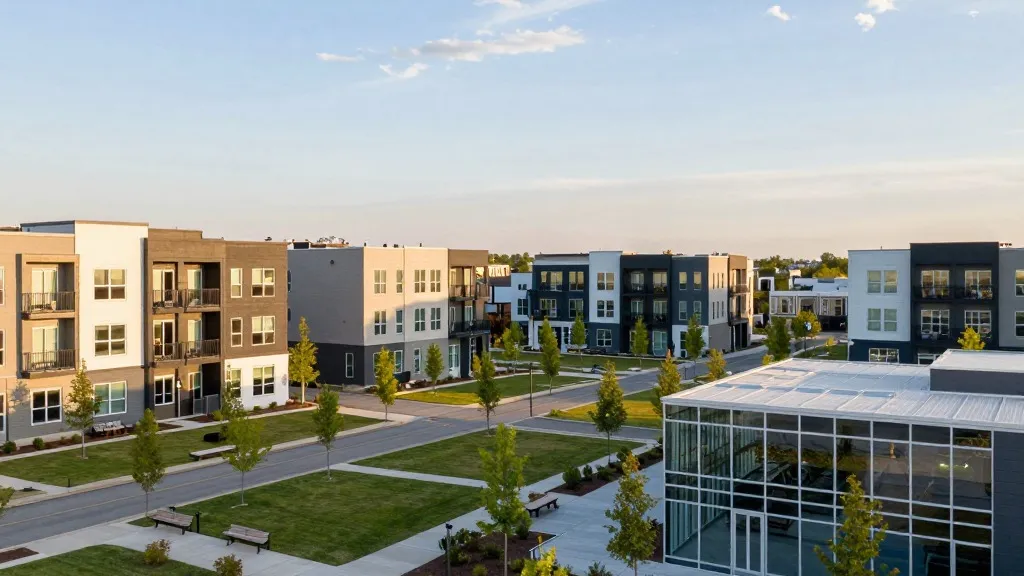
Northern Virginia has long been known as a hub for digital infrastructure, but one of its most ambitious upcoming projects has just been put on the back burner. Amazon has announced it will no longer construct four new data centers on the former George Washington University campus in Loudoun County, opting instead to transform the majority of the 122-acre site into mixed-use and residential developments.
This decision marks a significant shift in strategy for the company in a region already saturated with server farms. In addition to the housing and mixed-use components, Amazon will donate 25 acres of the property to Loudoun County. This land is designated for the construction of a new community arts center and recreational facility. Furthermore, the company has committed to contributing $5 million to the county’s housing fund, a gesture aimed at addressing local concerns about affordability.
The path to this agreement was not without friction. Amazon initially submitted its proposal for the data centers in July of this year. However, the plan faced immediate scrutiny from residents who were already wary of the noise, energy consumption, and environmental footprint of such facilities. These concerns were particularly acute in Loudoun County, which is often referred to as "Data Center Alley" due to its high density of such operations. By September, the tension had reached a point where a direct conversation was necessary.
Amazon and local leadership sat down to discuss the future of the site. During these meetings, Phyllis J. Randall, the Chair of the Loudoun County Board of Supervisors, suggested to Amazon that they might be better served by finding an alternative use for the land rather than pushing forward with the original server farm plan. It appears the company heeded this advice, leading to the current settlement.
Josh Weissman, Amazon’s vice president in charge of data center development, explained the company's perspective on the change. He noted that Amazon had been eager to purchase the former university campus when the opportunity first arose. However, he acknowledged that the company took the county’s “pointed concerns about data center development at this particular site” into serious consideration. Weissman stated that while Amazon viewed the legal development potential of the property differently than the county did, they concluded that the best outcome for all parties was to collaborate on a shared vision rather than engaging in costly litigation.
This local resolution occurs against a broader national backdrop of increasing friction between AI developers and local communities. The rapid expansion of artificial intelligence has driven up demand for massive, power-hungry facilities, leading to concerns about electricity price spikes and water usage. Just days before this news broke, President Donald Trump called for data center builders and AI hyperscalers to pay a dividend to local communities to help offset energy-related price increases. He also suggested that these facilities should be required to generate their own electricity and sell any excess power back to the local grid.
Loudoun County officials are framing this agreement as a win for community engagement. In a statement, Randall emphasized that by choosing dialogue over reflexive disagreement, the county and Amazon created an opportunity for residents. She highlighted that the new plan provides places for people to gather, create, and play, while also aiming to provide more attainable homes for working families.
While the decision satisfies many local critics who feared the strain of four new data centers, questions remain about the long-term balance of housing and infrastructure in the region. For now, the site of the former university campus is set to transition from a hub of digital processing to a neighborhood where residents can live, work, and recreate, marking a notable retreat for one of the world's largest tech companies in a key market.
The next steps will involve the detailed planning and construction of the new mixed-use facilities. Community members will be watching closely to ensure that the promised recreational spaces and affordable housing units materialize as described in the agreement. The situation serves as a case study for other regions grappling with the physical and environmental impacts of the AI boom.
Source: Tom's Hardware