The Lunar Clock Ticks: NASA’s New Math Reveals 22 Starship Launches Needed for Moon Landing
A recent safety panel review suggests the Artemis program may require significantly more orbital refueling flights than previously hoped, raising questions about the decade’s timeline.
By Samir Nasser ·
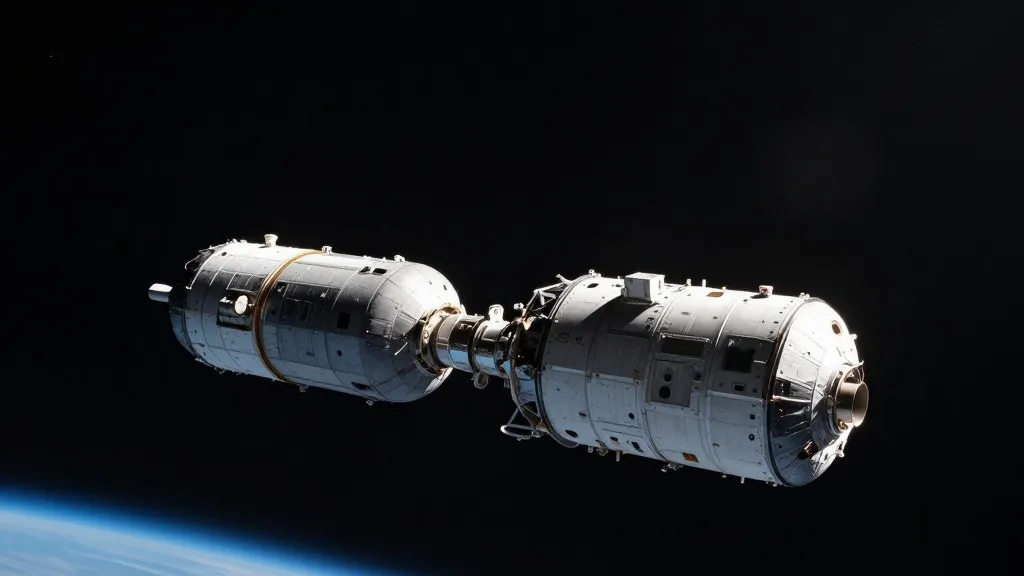
NASA has finally abandoned its long-standing practice of guarding the exact number of Starship launches required to support a crewed Moon landing, revealing a new estimate of 22 flights. This figure, shared during a recent aerospace safety review, marks a significant departure from earlier, vaguer projections and underscores the logistical complexity of returning humans to the lunar surface this decade.
The specific metric in question is the number of launches needed to fuel a Starship-based lunar lander in low-Earth orbit. To send a crew to the Moon and bring them back to lunar orbit, SpaceX must first launch a 'depot' Starship to serve as a tank. Subsequent 'tanker' Starships then fly out to load this depot with liquid oxygen and methane propellant. The new estimate implies that, in addition to the initial depot, 21 additional tanker missions are necessary to fully load the vehicle for the deep-space voyage. This is a substantial increase from previous internal estimates that suggested the number might fall in the 'high single digits to the low double digits,' or roughly a dozen flights.
For years, NASA officials have been reluctant to share this specific data point, often describing it as a moving target. In 2023, Lisa Watson-Morgan, then the director of NASA’s Human Landing System, told reporters that while the agency had a general idea, she was 'reluctant to say exactly what that is.' Other officials had previously cited figures in the 'high teens.' The consistent hope among program managers was that SpaceX would dramatically increase the lift capacity of the Starship rocket, thereby reducing the number of required tanker flights and making the overall operation more efficient.
However, concerns have grown among some NASA officials that these improvements in lift capacity may not arrive soon enough to keep the Artemis program on track for this decade. The latest estimate suggests that the current version of the vehicle will require a much higher volume of launches to achieve the necessary propellant levels. This shift in the mathematical baseline reflects a more conservative view of the rocket's performance capabilities in the near term.
The revelation came on Thursday during the quarterly meeting of the NASA Aerospace Safety Advisory Panel. Charlie Precourt, a former NASA astronaut and panel member, discussed the various risks associated with the Artemis program. His presentation highlighted the challenges of orbital refueling and the critical importance of accurate launch counts in planning the campaign. The panel’s discussion serves as a check on the program’s progress, ensuring that safety considerations are weighed alongside ambitious timelines.
For the people involved in the mission, this number represents more than just logistics; it is a measure of risk and readiness. Each additional launch increases the complexity of operations in low-Earth orbit and the exposure of the crew and hardware to potential failure. As the agency moves forward, the focus will be on whether SpaceX can accelerate development to lower this count or whether NASA must adjust its operational plans to accommodate a higher frequency of launches. The stakes are high, as the success of the Artemis program hinges on the ability to reliably assemble and fuel the lunar lander before the window for this decade closes.
Ultimately, the new estimate of 22 launches provides a clearer, if more demanding, picture of the path to the Moon. It forces a realistic assessment of the resources and time required to execute one of the most complex spaceflight campaigns in history. As the next phase of Artemis preparations begins, all eyes will be on the next Starship test flights to see if the numbers can be brought down, or if 22 becomes the new baseline for the return to the lunar surface.
Source: Ars Technica